
The author of The Corrections talks about a new TV adaptation, the future of reading and why creating new work is âhorribleâ
When HBO dropped its plan to adapt Jonathan Franzenâs bestselling novel The Corrections in 2012, the author was so relieved he says he performed his first and last cartwheel on the lawn of his home in Santa Cruz, California. There had been an attempted film adaptation before that, but he had been unsurprised by its failure, having warned that it was impossible to condense his densely plotted doorstopper of a novel into a feature-length film. This time, Franzen had signed up as co-writer, with filmmaker Noah Baumbach. He says that HBO was âexcluded from the development process. Mistake, because we didnât know how to do TV.â Franzen himself hadnât even owned a telly until a few years earlier and certainly didnât have cable, so as he was wrestling with the script, he began renting box sets. Around three episodes into one drama series, he realised âwe have no idea what weâre doing. This is not how you do TV. This is bad,â he recalls. The result, he says, was âone of the worst pilots anyone has ever madeâ.
Franzen used to think TV was the âenemyâ of the serious novelist. In a well-known 1996 essay for Harperâs Magazine about the decline of high literature he had complained bitterly about the âbanal ascendancy of televisionâ. But after the HBO series failed, he watched Breaking Bad, Nurse Jackie and Silicon Valley and loved them. In the age of social media, AI and the endless scroll, TV has started to look like a âfriendâ, he says now. And The Corrections is finally being adapted into an eight-part Netflix series, with Meryl Streep playing Enid Lambert, the matriarch clinging to dreams of hosting a perfect last family Christmas, even as her husband Alfred is in terminal decline with Parkinsonâs and dementia and their grownup childrenâs lives are falling apart in terrible, comical ways. Once Streep announced she was in, Franzen felt the âchances of making this show have gone up above 50%â. He says heâs a month away from finishing the script.
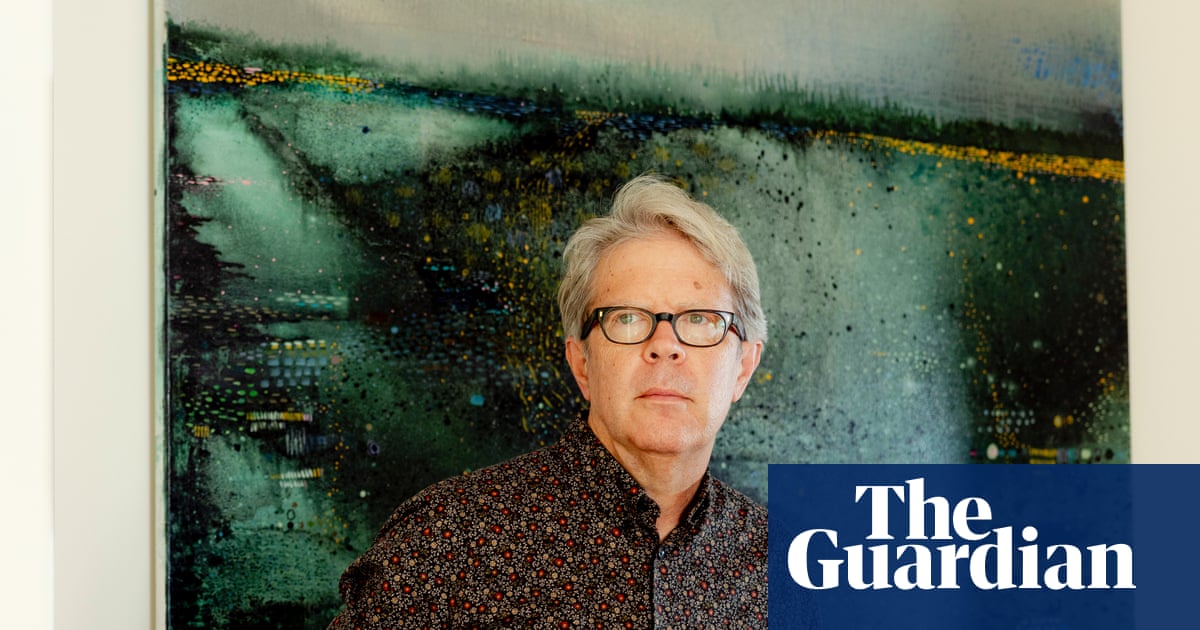
We are meeting at his home on the edge of Santa Cruz, in his office where the blinds are pulled down low against the bright sunshine. He is 67, tall and slightly stooped, and although his hair has turned white he still looks boyish when he laughs, wide smile and little snub nose, a wicked glint behind his trademark dark-framed spectacles. He has settled into a chair that seems too small for his lanky frame and frequently squirms with discomfort. Should we try switching places, I ask at one point? âNo, Iâm just physically expressing discomfort with repeating myself,â he replies. He likes to edit his speech as he goes along: âstrike that word!â he orders at one point, and âthis needs to be underlinedâ. When he loses his thread he announces, grandly, âyou can redirectâ.
The Corrections, Franzenâs third novel, won the 2001 National book award for fiction in the US, and remains one of the bestselling works of literary fiction of recent decades. It was published a few days before 9/11 and distils the materialism, anxieties and complacency of Americaâs long 20th century. It is also Franzenâs most âautobiographical novelâ, drawn loosely from his own midwestern upbringing: Franzen was raised in an affluent suburb of St Louis, Missouri. Like Alfred, his dad, who was an engineer, developed Parkinsonâs and Alzheimerâs, while Enid is a âcartoon versionâ of his own mother. âThere are not very many incidents from my life in the book but those two: the personalities and the self-deception about the gravity of the mental deterioration â thatâs all drawn from my own experience,â he says.
Franzen says he learned his âpsychology as a novelistâ from his family. His parents were âpowerful charactersâ: they were âhilariousâ and âterrifyingâ and also âthoughtfulâ, with rich interior lives. âThey created not only Enid and Alfred, but really the notion of a character ⦠the combination of intellectual substance, emotional wanting, emotional needs and comedy,â he explains. His father died before The Corrections was published. His mother lived long enough to know that an extract had appeared in the New Yorker, as part of a special issue dedicated to American writers under 40.
âMy annoying aunt, her sister, called her up and said: âIrene: do not read Jonâs piece in the New Yorker,ââ Franzen recalls. His mother was ill with cancer and had been given months to live. He visited her a few days after that phone call, when inevitably her question was âWhy shouldnât I read your piece in the New Yorker?â. He summarised the story for her, âmaking some small omissions, but basically just describing what the thing wasâ. When he was finished, she said: âThank you, I donât need to read it.â It was one of their last long conversations. She died 10 days later. âMy parents gave us kids everything â including a lot of criticism. But then they just exited, and I was still in my 30s and could write whatever I want,â he says. He could not have published The Corrections had they been alive. Most of his subsequent novels â including Crossroads and Freedom, two other big, ideas-filled books â have also centred on dysfunctional midwestern families. âIt always puzzles me that people find it remarkable that I have characters who are related through family in my books,â he says, sounding a bit put out. âBecause itâs like, well, the Bible is a book of family stories. The Old Testament, itâs all family stories. The Greek myths, Homer â¦â
Franzen initially studied science at university: âThat was a bit of a beard to get my parents to pay for college,â he says. They were not happy when he switched majors, âbut at least I did something serious like German literature as opposed to a frivolous English major, which they literally would not have paid for.â After graduating from Swarthmore, a liberal arts college in Pennsylvania, in 1981, he won a year-long Fulbright scholarship at the Freie Universität in Berlin. His first novel, The Twenty-Seventh City, was published six years later, in 1988. He has worked full-time as a writer ever since. âI made nothing but mistakes as a young person but actually was lucky enough to realise, this is what youâre good at,â he says.
Franzen describes The Corrections as an âangry comedyâ and he has a reputation for being, well, an angry guy. Where does his anger come from, I wonder? âItâs still mysterious to me, having so many privileges â not really economic privilege, but every other imaginable kind of privilege â that I was angry for so long. Thereâs 14 years of being in a marriage that should have ended after two years. That explains a lot, actually,â he says. He married a fellow writer, Valerie Cornell, soon after graduating, and they divorced in 1994. âThen thereâs you know, Iâm a bright guy, and the stupidity of the world makes me angry.â Oh, and in the 90s, he spent a lot of time âangry that people were seen to be losing interest in the kind of novels that I wroteâ. But, he adds, âI donât know why people think of me as angry now, because I havenât really been angry in that way since a year after The Corrections was published.â
That first year, he concedes with a wry smile, was a little âbumpyâ. Many will remember his spat with Oprah Winfrey, who picked The Corrections for her book club and invited him on to her show, only to rescind her invitation after he described her other picks as âschmaltzyâ. The pair later made up â she picked Freedom for her book club in 2010, and they hugged on live TV. One of his problems, he points out, is that he cannot âstart a thought without injecting a counterthought to itâ. Read only half the quote and he comes across like an âassholeâ. While criticising her picks, he also praised Oprah for promoting reading, for instance. He can see now that she was right to be annoyed. But, counterthought: âWell, some of her earlier picks were â¦â theatrical pause â⦠schmaltzy.â
Other spats have followed, with the writer Jennifer Weiner over the disproportionate attention given to Franzenâs work. Thought: Weiner is âfreeloadingâ on the gender debate and âasking for a respect that not just male reviewers, but female reviewers, donât think her work meritsâ. Counterthought: the gender bias in literature is a genuine problem. He got into trouble for saying he considered adopting an Iraqi orphan to better understand young people. Counterthought: that mad idea lasted six weeks at the most. Franzen says he has learned to become more circumspect. âI didnât know what I was doing. I didnât know how to talk to people in an interview. I didnât know how to do TV. I would just say whatever I was thinking about and then I would get into trouble and I would feel like: âOh, unfair! Iâm getting into trouble.â Well, you know, dude, wise up, learn how to protect yourself. Donât say those things.â
In 2010, following the publication of Freedom, Franzen appeared on the cover of Time magazine, a rare achievement for any writer. The piece described him as the âGreat American Novelistâ. He says it was his suggestion that he should be the cover. He got his publicist to contact Time to say they hadnât had a writer as a cover star for ages, and Franzen would be great. Wait, what, I ask, shuffling through my notes, doesnât that piece describe you as âsingularly ungifted at what you might call brand managementâ? âIsnât that hilarious?â he asks, his eyes widening in delight. âItâs hilarious!â
He doesnât think much of the phrase âgreat American novelâ, though. âItâs usually not said kindly. Itâs sort of mocking,â he says. He puts on a bullying sneer: âOh, the great American novelist. Oh, youâre going to write the great American novel, are you?â
Franzen is not as down on the future of the literary novel as he used to be. That Harperâs essay? His real complaint at the time was âpeople werenât buying books like mineâ, he says, pretending to sob. âActually, they were. They were just not buying my novels. That was my complaint in the 90s, and of course I blew that up into some huge cultural problem.â These days, he thinks those who bemoan the decline of reading need some perspective. âI think the doom-criers about the novel tend to make a fundamental mistake. They imagine some golden age when everyone read Flaubert. There was never a time,â he says. Itâs true, he continues, that modern technology does little to help cultivate a love of reading. âItâs easy to imagine a time soon when there is no reason to be able to read, because text can be converted into spoken language and you donât have to write because you just speak and it can be written for you,â he says. But that hardly feels like the worst thing happening in the world right now. âThatâs the other thing I feel about the doom-criers of the novel, itâs like, really, this is a world historical problem? People canât read Steinbeck any more? Itâs sad, but nothing lasts for ever. What do you want?â
Franzen says he doesnât want to comment on American politics because ânobody cares what the novelist thinksâ, plus he did an interview with the German newspaper Die Welt before Donald Trumpâs second term in which, like many pundits, he predicted that the president wouldnât follow through on most of his promises and âitâs like no, I was all wrongâ. He was, however, on to Trump early. He wrote about the future president in his 1992 novel, Strong Motion, and in various essays that decade. âHe symbolised a certain kind of horribleness, a crass, narcissistic, bullying side of American life that, yeah, I noticed early and I hated. I didnât even live in New York when I wrote Strong Motion and I could feel that odious presence,â he says.
Heâs more open to weighing in on environmental issues, having written several feather-ruffling essays for the New Yorker on the climate crisis. He angered climate crisis activists by arguing that humankind needs to accept that global warming is going to happen and start refocusing on local projects devoted to conservation and biodiversity. A passionate birder himself, in 2015 he criticised the bird conservation organisation Audubon for falsely claiming that climate change is the main threat faced by birds, rather than collisions with glass windows and hunting by cats, two more fixable problems. Audubon responded by accusing him of âextreme intellectual dishonestyâ. âTheyâve apologised,â he says when I ask him about it, âfull stop.â
Franzen discovered his passion for birds soon after The Corrections was published. He goes on birding trips whenever he can, but he can also spot a lot from his home: there are violet-green swallows nesting next door, and hooded orioles in the back garden. If it wasnât so hot, and his blinds werenât drawn so low, weâd probably see a family of quail running past his office window. âIf you want to see quail, this is one of the best places in the world,â he says.
He shares his home with his longtime partner, the writer Kathryn Chetkovich. In a corner of his office there is an electric guitar. He picked up the guitar while working on Freedom, and has this morning been practising with the band, Shady Characters, which he formed with Chetkovichâs brothers. Itâs a purely private hobby. âI have never performed in public, and I never will,â he announces.
Last June, Franzen published a new story in the New Yorker about an aspiring teenage actor suffering an unwanted pregnancy and a crisis of faith. It will form part of his next novel, a sequel to Crossroads, which was published in 2021 as the first book in a proposed trilogy. Does that mean his next book is imminent? âThis is not, âIâve delivered the manuscript and weâre getting a little teaser.â No, this is a âIâve gone deep into the cave and I need to send a sign of life,ââ he says. It takes Franzen many years to write a novel, and the years before he has settled on a new project are often âhorribleâ, he says. He tries to distract himself, often by writing nonfiction, and then âI periodically go back and beat my head against the proverbial brick wallâ. âItâs not fun,â he confirms: âSome other day, another idea. Yeah, that one didnât work either. Wake up in the middle of the night. Yeah, I got it. No, you donât.â
Franzen believes the most difficult part of writing a new novel is that it requires him to change: he needs to become âthe kind of person who can write the novel. Iâve had to become a different person in some significant way to get each book written.â To move from The Corrections to Freedom he had to let go of his anger. To write Crossroads, he had to become more forgiving. Right now, he says, âIâm waiting to wake up as the person who is alive again and not the same person he was five years ago.â
Does this mean he sees writing as a means of self-improvement? God, no! When heâs working on a scene, trying to capture a character or get the tone right, heâs not thinking in moral terms. âIf youâre really engaged with that, itâs not a matter of morality, but a matter of getting at something true. So I prefer truth as a goal to morality, to self-improvement, to the betterment of oneâs soul,â he says. âI donât really care about bettering my soul. I care about getting it right,â he adds. And then, the reflexive edit: âWhich is a pretty good ending line.â
General
Jonathan Franzen: âItâs still mysterious to me that I was angry for so longâ
Source
The Guardian
· Sophie McBain