
FeatureThe United Nations Interim Force in Lebanon is due to end its operations on December 31, after 48 years of deployment. Lebanese authorities and members of the UN Security Council believe that an international presence must be maintained.
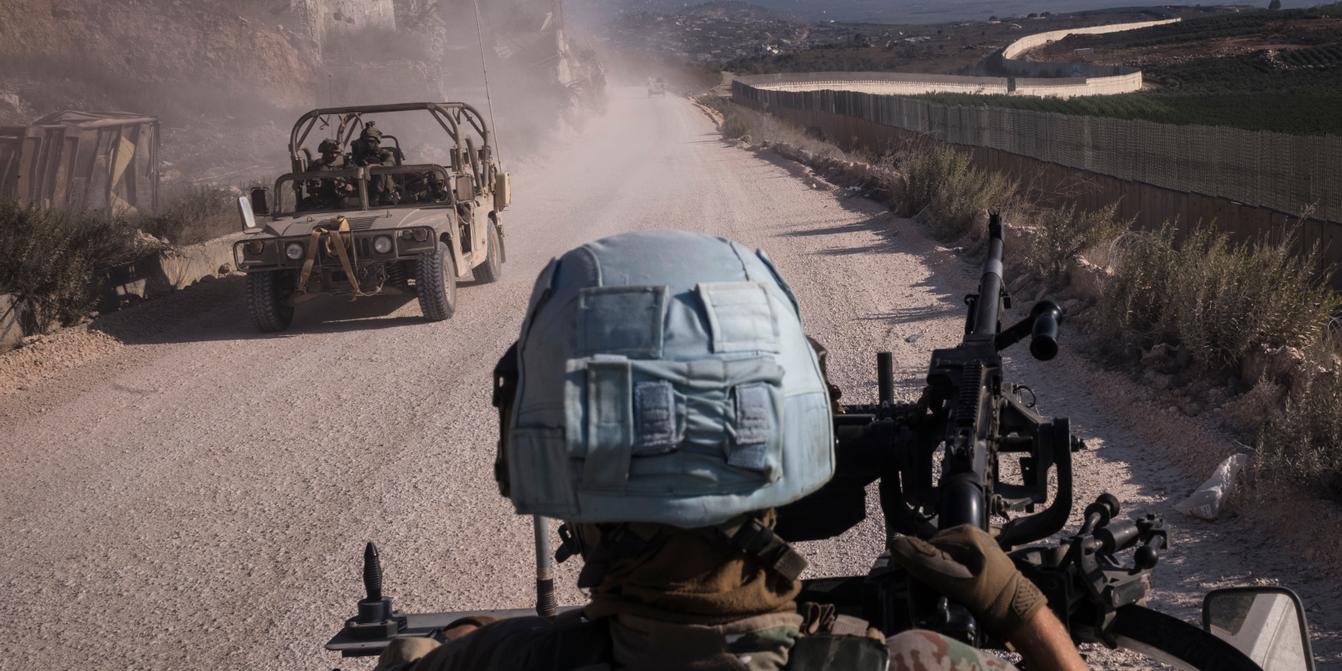
Two buggies carrying Israeli soldiers raced down the road, narrowly passing the white armored vehicles of the United Nations Interim Force in Lebanon (UNIFIL) along the road that runs beside the "Blue Line" demarcation between Israel and Lebanon. Since the Israeli military seized a strip of territory extending 10 kilometers into southern Lebanon, the road has been used regularly only by Israeli soldiers and UN peacekeeping convoys resupplying UN bases south of the "Yellow Line," which marks the area under Israeli occupation – about 6% of Lebanese territory.
On both sides of the road, vegetation is gradually swallowing up the ruins of the houses. The Israeli military destroyed more than 60 villages with explosives and leveled them with construction equipment. Explosions could still be heard in some areas, including in Al-Mansouri, a village on the edge of the occupied zone that Israel began destroying with artillery and drone-dropped charges. In this hilly region, only a handful of Christian villages remain standing, where a few thousand Lebanese people live, cut off from the rest of the country.
Israeli soldiers now have absolute control over this desolate landscape. They have deployed throughout the occupied area in light armored vehicles and tanks. Their flags and anti-drone nets mark their presence over houses, including at the Hôtel Rêve de la Mer, opposite the UNIFIL headquarters in Naqoura. They have established four new semi-permanent bases in addition to the five bases they had already occupied along the Blue Line since the 2024 cease-fire.
General
As UN peacekeepers in Lebanon pack up, fears grow that Israel could 'do anything, without witnesses'
Source
Le Monde
· Édouard Elias