
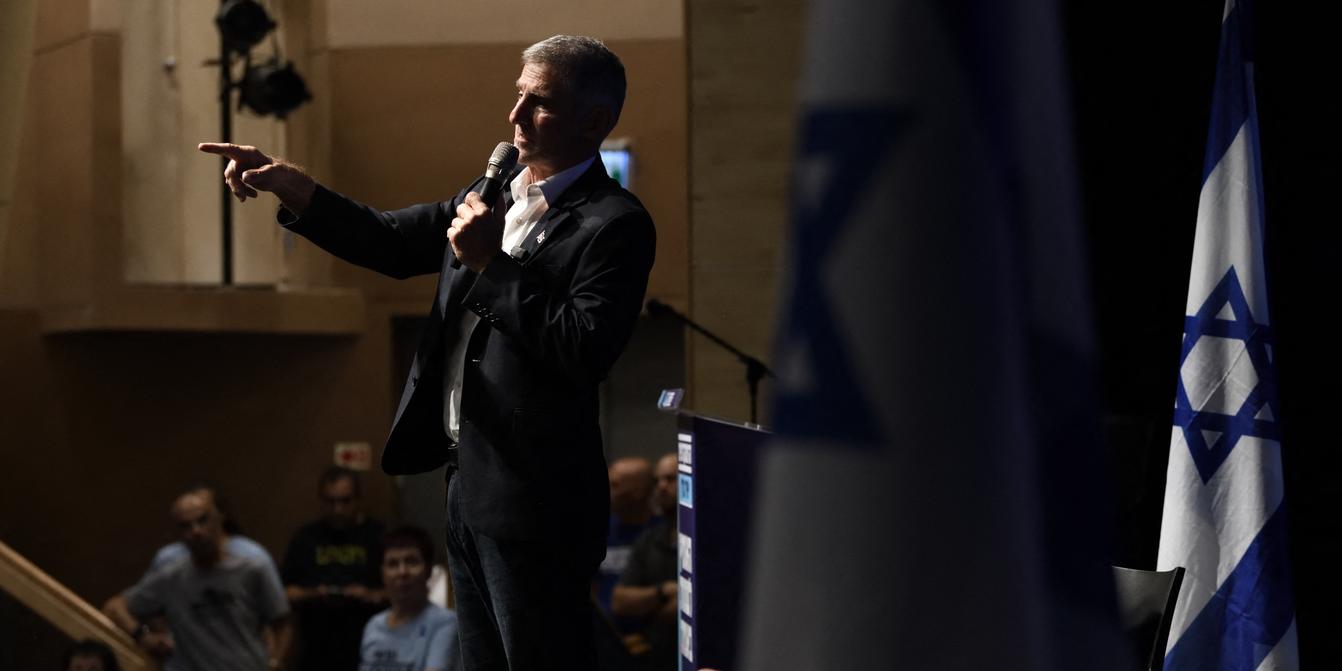
It is never a good sign when politicians are reduced to calling for a ceasefire among their own allies. In Israel on Thursday, September 17, Yair Golan, leader of the left-wing Democrats, directly addressed his partners in the opposition coalition against the government led by Benjamin Netanyahu.
"Gadi, Naftali, Avigdor," he wrote on X, using the first names of Eisenkot, Bennett and Lieberman, "we must not attack each other. The game of musical chairs does not matter – what matters is the country." "Our only mission is to save the country together," insisted the retired general, who was polling at around 10 seats, 40 days ahead of an election seen as decisive for the country's future – to be held on October 27.
Indeed, the opposition has come under constant pressure from what Israelis call the "poison machine," a campaign maintained by Netanyahu's inner circle to attack his opponents by any means, resorting to insults, accusations and lies.
In this context, the opposition's primary challenge is a leadership problem. On the government side, even though Itamar Ben-Gvir, the national security minister, who openly promotes a racist vision of society, has sought to position himself as the future leader of the far right, there is no doubt that Netanyahu will be prime minister if his bloc secures a majority.
General
Ahead of Israel's legislative elections, opposition to Benjamin Netanyahu weakened by internal divisions
Source
Le Monde
· Luc Bronner