
Jean-Luc Mélenchon has successfully brought a key theme into the presidential election campaign by offering a simple solution to a problem that successive governments have failed to resolve. Until now, the public debt had not been an electoral issue. Mélenchon, leader of the radical left La France Insoumise (LFI) party, found a way to make the issue almost comprehensible by proposing to write off the share of French debt held by the European Central Bank (ECB). He has thus turned a complex issue into a strikingly simple promise.
This is not a new idea. It has featured in LFI's campaign platform for several years now, though in a slightly different form: transforming the debt held by the ECB into perpetual, zero-interest debt. During the Covid-19 pandemic, economists debated whether central banks should neutralize the bonds they had acquired. The proposal is therefore neither an economically absurd suggestion nor obvious common sense. Still, it is important to understand what this so-called "debt to ourselves" actually means.
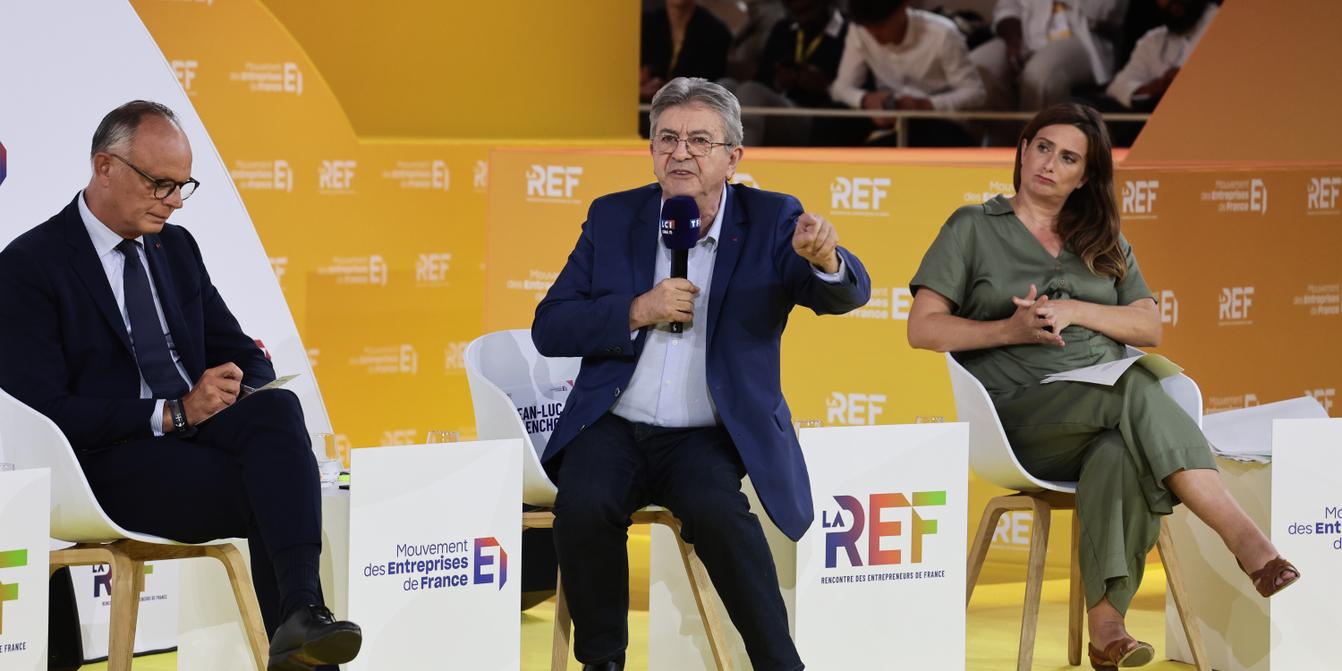
France borrows from investors. According to Mélenchon, the Banque de France then buys out a portion of these bonds – representing 18% of the total debt – as part of the ECB's monetary policy. The LFI candidate views this debt as, in a sense, one we owe "to ourselves," and has suggested erasing it – not unilaterally, but as part of a European agreement. During a debate organized by the MEDEF employers' federation at the end of August, he even wagered that several countries could be brought on board with this idea.
However, the term "debt to ourselves" is misleading. The Banque de France is part of a common monetary system, in which decisions must be made jointly with the eurozone's other central banks. As a result, erasing the bonds it holds would not simply be a simple transaction between France and its central bank. Joachim Nagel, the president of the Bundesbank (Germany's central bank), argued in an interview with Le Monde in early September that such debt cancelation would amount to monetary financing of governments, which is prohibited by Article 123 of the Treaty on the Functioning of the European Union; it would risk opening up "a Pandora's box" that would then lead to hyperinflation.
General
'A debt can be erased, but the decisions that created it always have to be paid for in one way or another'
Source
Le Monde
· Stéphane Lauer